
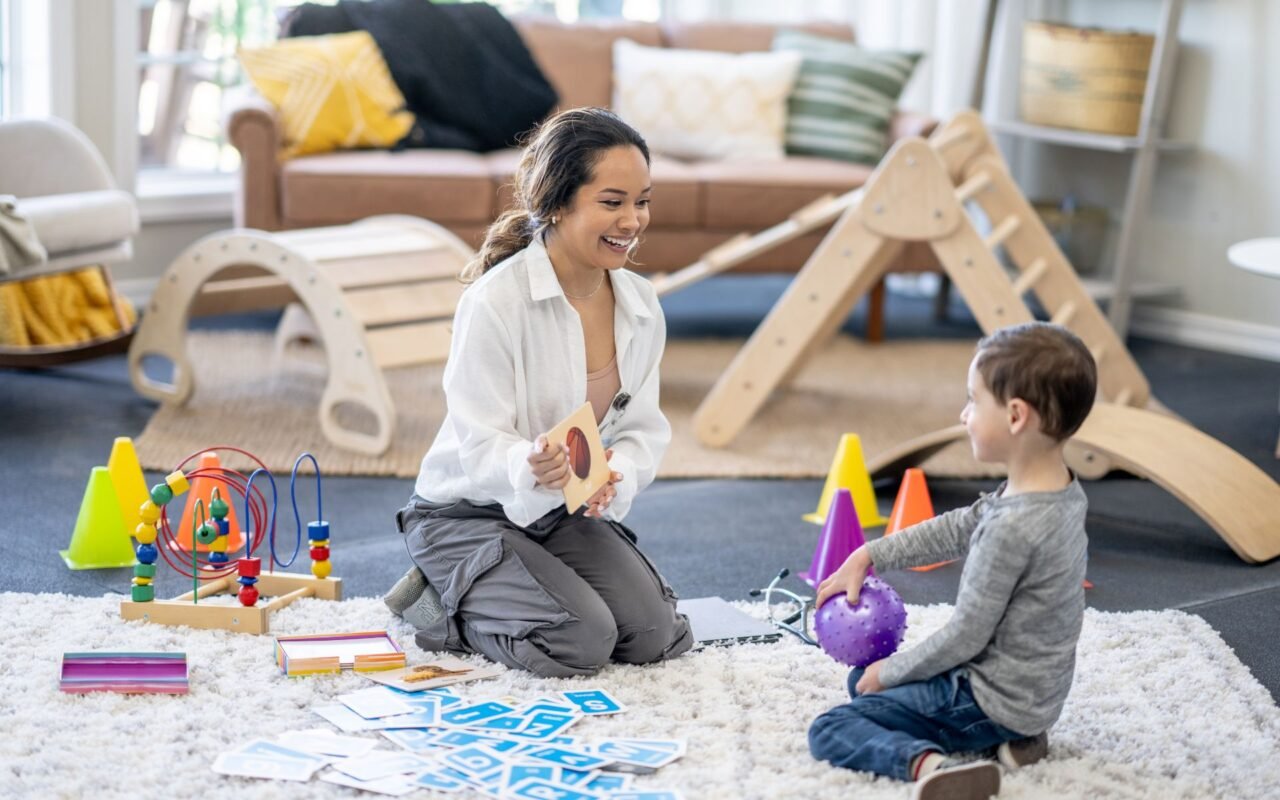
Parents often ask what actually happens during an ABA session. While every child’s program is individualized, ABA sessions follow a thoughtful structure designed to support learning, engagement, and emotional regulation.
Consistency and flexibility work together to create meaningful progress.
ABA sessions are guided by a treatment plan created by a supervising clinician and implemented by a Registered Behavior Technician (RBT). The structure provides predictability while allowing room to follow the child’s lead.
A general flow of an ABA session
A typical session may include:
Pairing and rapport-building to help the child feel comfortable
Skill-building activities aligned with treatment goals
Natural play and learning opportunities
Behavior support and emotional regulation strategies
Data collection to track progress
A brief transition or wrap-up
Sessions may take place in the home, school, clinic, or community, depending on the child’s needs.
What RBTs focus on during sessions
RBTs work under the supervision of a licensed clinician and focus on:
Teaching functional and social skills
Supporting communication and independence
Reinforcing positive behaviors
Adapting activities based on the child’s responses
Parents may observe sessions or receive updates to help reinforce skills outside of therapy.
Why structure matters
A predictable session structure helps children feel safe, supported, and ready to learn, while still allowing therapy to remain engaging and responsive.